
MEGA Postal Stamp Grading Scale
DOES
MEGA?
MEGA evaluates postal stamps using its proprietary grading scale, developed in alignment with the highest standards of the philatelic industry and recognized global practices. This system reflects a refined synthesis of established methodologies, ensuring consistency, accuracy, and credibility in every certified grade. The MEGA scale provides collectors and professionals with a reliable framework for assessing condition and quality across all stamp types.
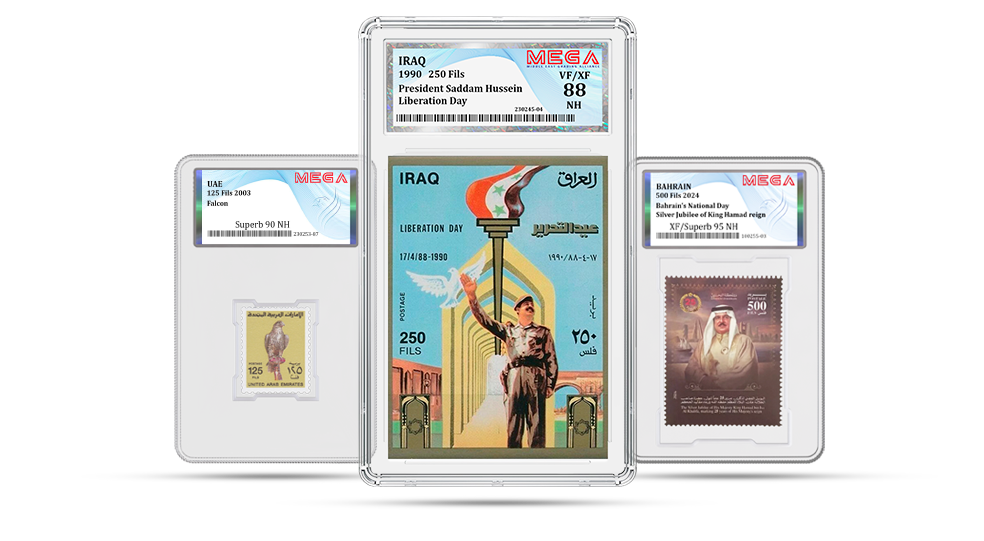
You can explore the grading scale in more detail here.
Grading ScaleEach numerical grade assigned by MEGA is determined through a comprehensive analysis of eight key categories. This structured, multi-factor approach ensures that every aspect of a stamp’s preservation and visual integrity is carefully evaluated. As a result, MEGA delivers precise and transparent grading outcomes that meet the expectations of advanced philatelists.
STANDARDS
STANDARDS
In addition to numerical grades, MEGA applies widely recognized suffixes to further define key characteristics such as gum condition, hinge status, and defects status. This standardized designation system aligns MEGA-certified stamps with international philatelic conventions. It enables collectors, dealers, and institutions to confidently compare, trade, and curate MEGA-graded material within the global marketplace.
